

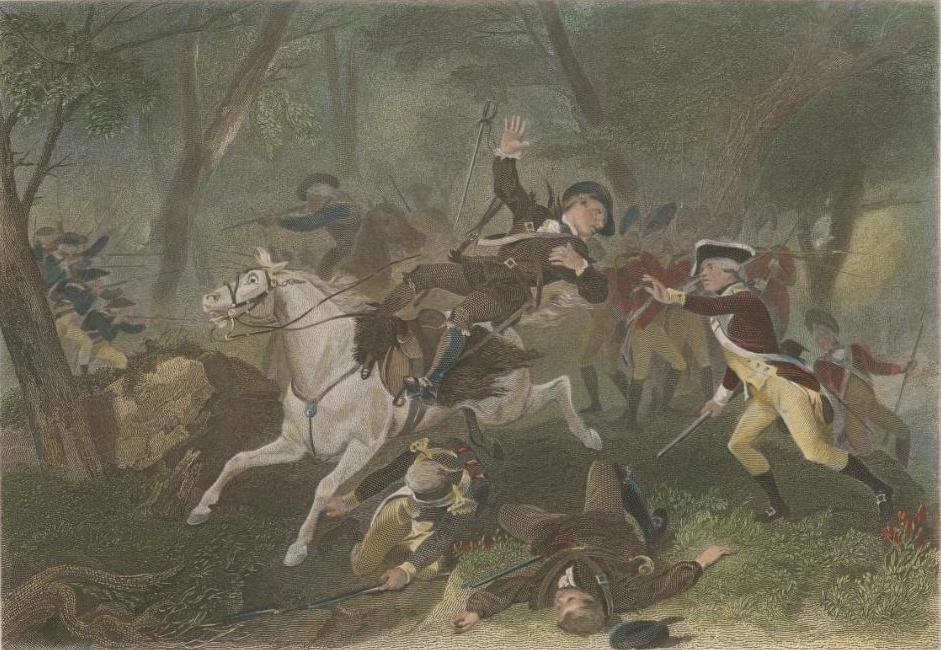
With all the talk about what happened 250 years or so ago, you’ve probably heard that more of the American Revolution’s battles were fought in South Carolina than in any other state (or colony, depending on your point of view). Some scholars and enthusiasts express doubt about that.
Rick Wise sweeps their doubt aside. A large part of his job as Executive Director of the South Carolina Battleground Preservation Trust is to keep track of, preserve, interpret and increase accessibility to battlefields all across the state. He knows all about many of them and where they are. Not just the big, regiments-marching-across-the-field fights that everyone has heard of, but the many other skirmishes and actions.
He will share that knowledge in a free lecture, “South Carolina and the American Revolution,” at noon on Friday, March 6, at the South Carolina Confederate Relic Room and Military Museum. The program is part of the Relic Room’s regular Noon Debrief program, and the public is invited.
Wise spoke at a Noon Debrief last April, on the subject of his years of work on “The Francis Marion Papers.” Those documents now provide the public with much better understanding of the life of the Swamp Fox and his role in setting our nation free. You can read them anytime, for free, at https://southcarolina250.com/publications/.
This time, he’s telling a broader, foundational story about the Revolution and the Palmetto State’s role in it. All this year, many of the twice-monthly Noon Debriefs are focusing on aspects of the Revolution. Already since the new year began, there have been programs about the Battle of Cowpens and Light-Horse Harry Lee, and there will be quite a few more.
Rick Wise’s aim is to lay a foundation for absorbing those other topics. He will offer the big picture of the war that heated up in these parts starting in about 1778, after three years of fighting in places like Massachusetts, New York, New Jersey and Canada. British commanders then marched south, on the theory that the road to victory might lie through the wealthier states down our way.
They turned out to be wrong, as they eventually learned at such places as Stono Ferry, Port Royal, Hanging Rock, Camden, Kings Mountain, Cowpens, Hobkirk Hill, and Eutaw Springs. According to the late John C. Parker, Jr. in his outstanding work, Parker’s Guide to the Revolutionary War is South Carolina, there were more than 600 actions and events that occurred in South Carolina, counting every pitched battle, skirmish, ambushes, house burnings and solitary murder.
Again, Wise looks at the big picture. In a recent interview, he spoke of something that happened long before the shooting at Lexington and Concord. In 1766, as tensions were heating up between the colonies and the Mother Country, Benjamin Franklin appeared before the British House of Commons. Over the course of four hours, he answered 174 questions regarding colonial resistance and taxation.
Parliament did repeal the act, but Wise wishes Franklin had told the members more than he did, and made them really understand how the relationship was deteriorating. Franklin approached them as an Englishman seeking the rights of an Englishman. If he’d succeeded at that, it might have prevented the spilling of so much blood – too much of which soaked into the soil of South Carolina. Instead, perhaps he left the meeting feeling they viewed him as less of an Englishman, and that Franklin should consider himself to be more an American.
Comments are closed.