

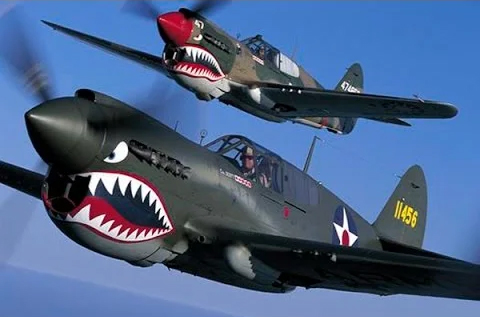
What do you know about the Flying Tigers? If you’re like most of us, your answer is likely, “Not much.” Here’s a chance to do something about that.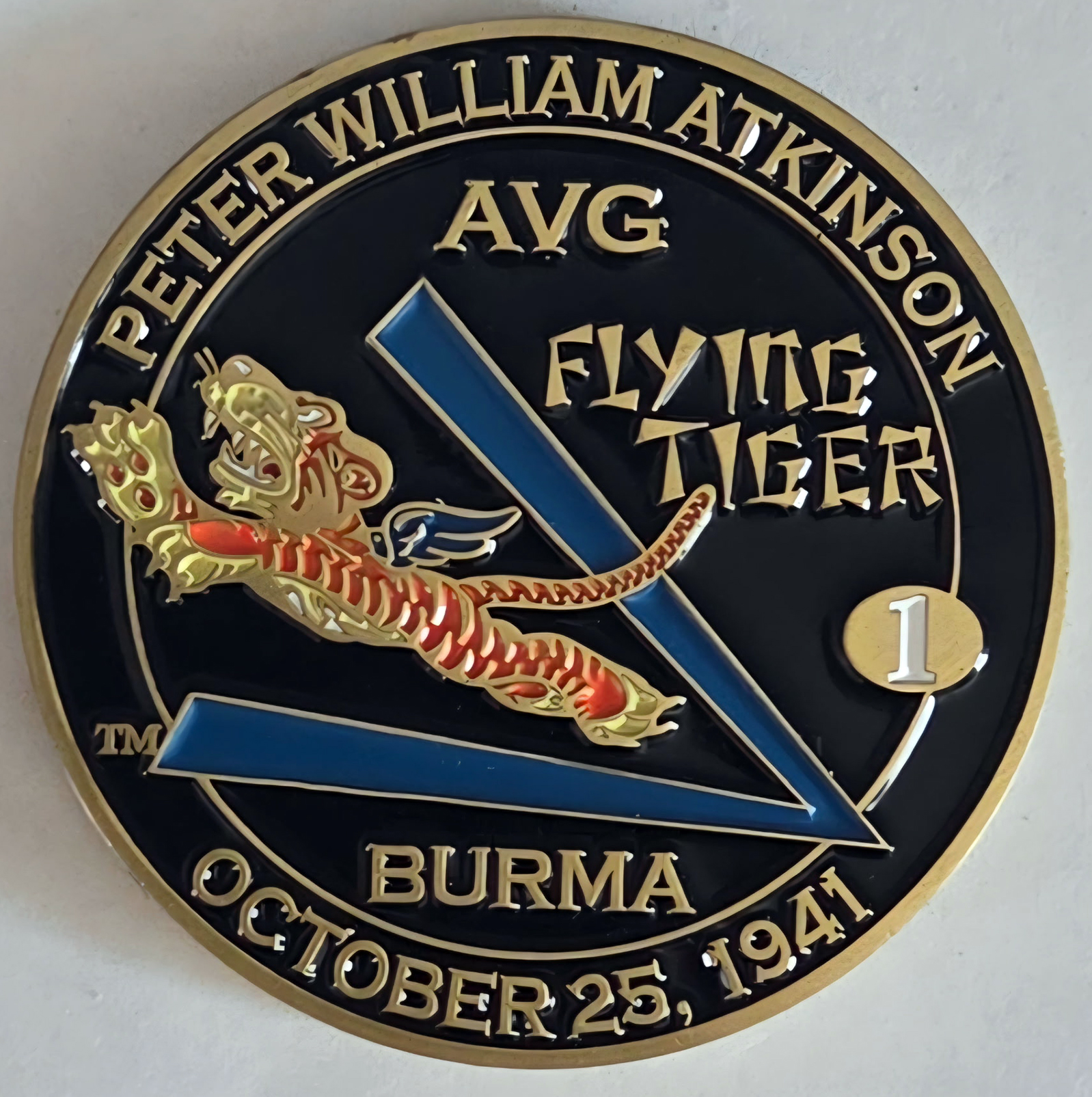
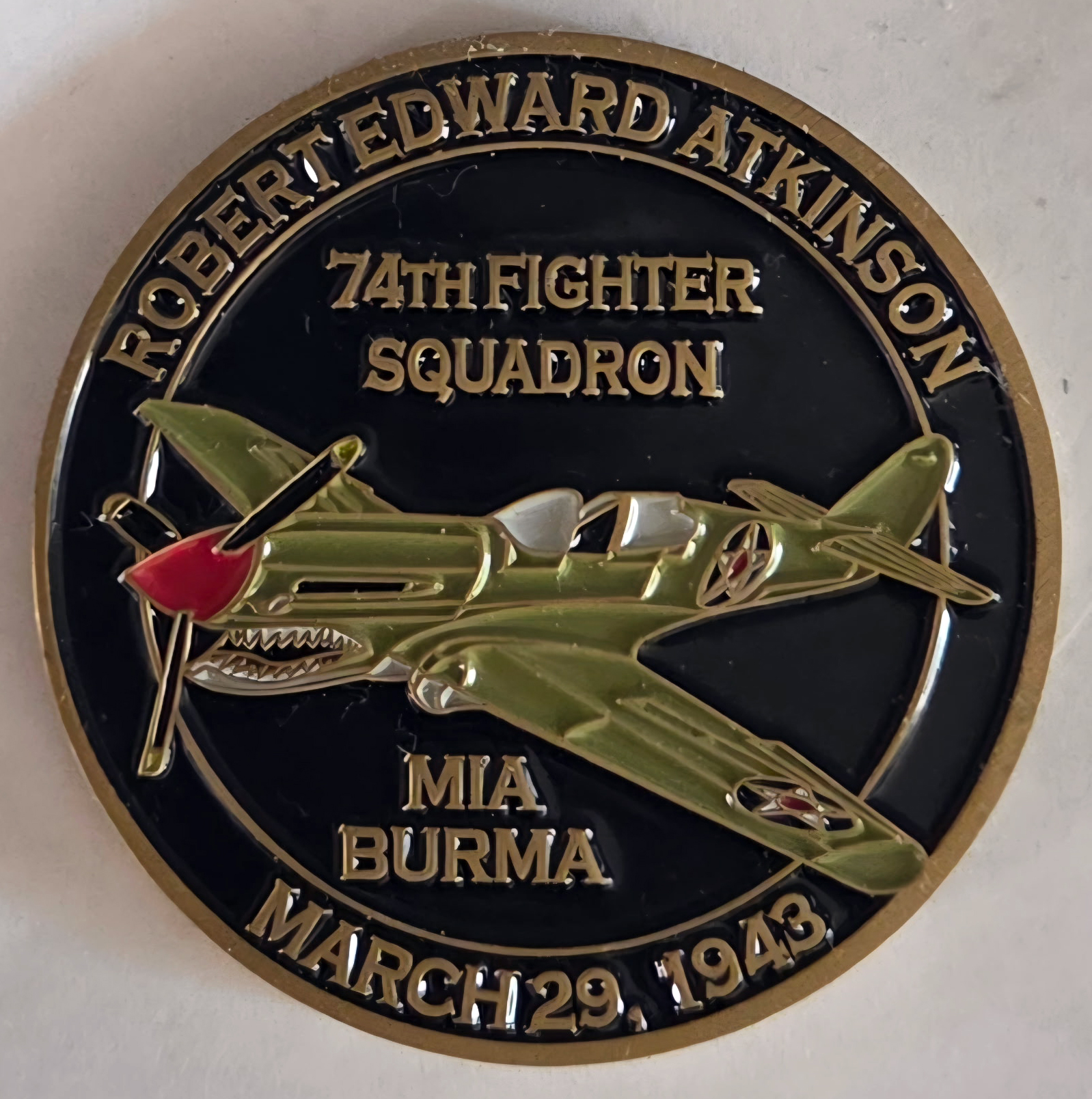
Commemorative coins remembering the two Atkinson brothers.
The Flying Tigers were Americans – pilots from the Army, Navy and Marine Corps, plus a few civilians – who volunteered to go to China and fight the Japanese starting in April 1941. After many delays, their first actual combat mission was on Dec. 20. That was almost two weeks after Pearl Harbor, but months before what we usually think of as the first instances of America fighting back – the Doolittle Raid, the Battle of Midway, and Guadalcanal.
At noon on Friday, May 1, Dennis DuPuis will deliver a free lecture at the Cayce-West Columbia Branch of Lexington County Public Library at 1500 Augusta Road in West Columbia. “Claire Chennault’s ‘Flying Tigers’” is part of the South Carolina Confederate Relic Room and Military Museum’s regular Noon Debrief program, and the public is invited.
Noon Debrief regulars know Dennis DuPuis. Not only does he often attend the lectures, but he’s given a good one himself. In 2024, he spoke of his experiences as a helicopter pilot through two tours in Vietnam in a program called “From High School to Flight School.” That talk was seen and heard by far more than the usual Noon Debrief audience, because it was aired nationally on C-SPAN.
As listeners learned then, Dennis became a combat pilot at the age of 19 largely because of the examples of his father and older brother, who went to Vietnam ahead of him. He was also inspired by the earlier service of Peter William Atkinson, his father’s first cousin.
Atkinson was a Flying Tiger.
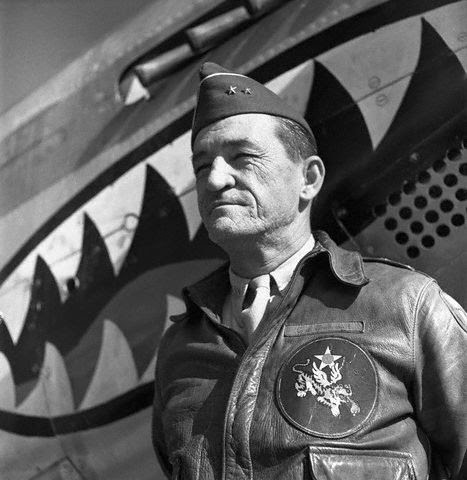
Major General Claire Chennault in 1944.
The “Tigers” were officially known as the First American Volunteer Group (AVG). The AVG was formed to help oppose the Japanese invasion of China. Operating in 1941–1942, the mixed group of 300 Americans were commanded by Claire Lee Chennault, a former captain in the Army Air Corps. Their Curtiss P-40B Warhawk aircraft, marked with Chinese colors but flying under American control, became famous for their distinctive nose art, making the front of the plane look like the head of a shark.
The Tigers demonstrated innovative tactical victories at a time when the news in the U.S. was filled with little more than stories of defeat, giving America hope that it might eventually defeat Japan. AVG pilots earned official credit and received combat bonuses for destroying 296 enemy aircraft, while losing only 14 pilots in combat.
On 4 July 1942 the AVG was disbanded and replaced by the 23rd Fighter Group of the United States Army Air Forces – which retained the nose art that the Tigers were known for. The 23rd was later absorbed into the U.S. Fourteenth Air Force – which was commanded by Chennault, who had rejoined the Army and quickly risen to the rank of major general. The new, more official unit retained the nose art that the Tigers were known for.
Peter Atkinson was the AVG’s group engineering officer – essentially a test pilot. He was killed on a test flight in 1941, and is buried in Tougoo, Burma. His younger brother would fly with the new Air Force unit that replaced the Tigers.
Dennis says today of the AVG, “That’s what inspired me to do what I did. Flying.”
Come learn all about the Flying Tigers on May 1.
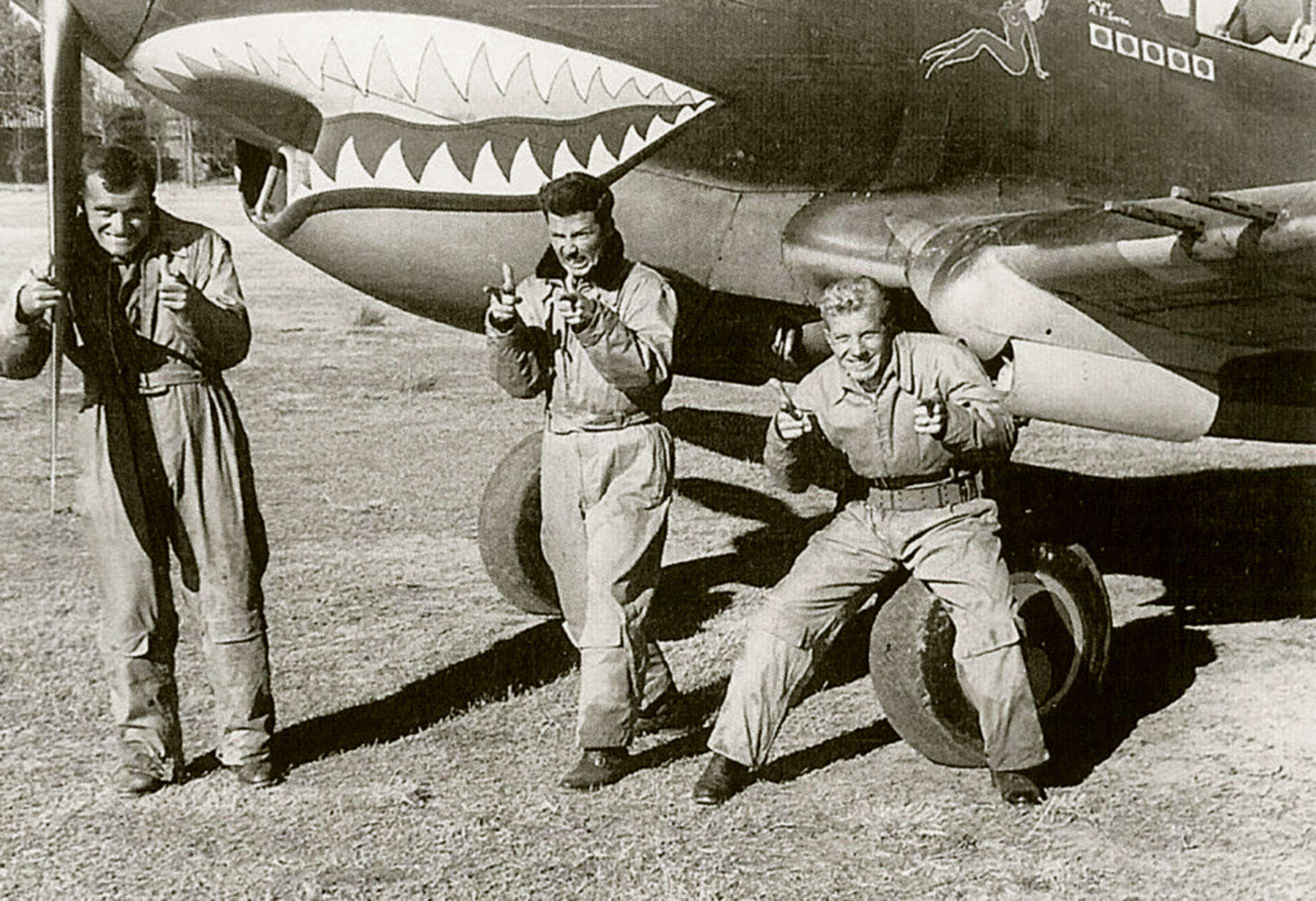
Some ‘Flying Tigers,’ rarin’ to go…
Comments are closed.